

SPONSORED CONTENT
The F&I Coaching Model Every Agent Should Understand
By: Mark Cortez, CRO, EasyCare
Sponsored by:


Agents see something most people inside a single dealership never see. You watch F&I training succeed at one store and fail at another, using the same materials and sometimes the same trainer. That pattern is not random. It points to a flaw in how the industry has approached F&I development for decades, and agents who can explain that flaw to their dealer clients bring more to the table than product placement.
The traditional model treats training as an event: a class, a workshop, a certification. That model was built for a department with stable staffing and slower change, and neither condition exists anymore. Margins are tighter, compliance expectations keep climbing, and F&I turnover means the team trained in January may be half gone by summer. An event-based model cannot keep pace with that kind of churn.
The Visibility Gap Behind Every Inconsistent Store
Most dealerships can tell you what their F&I team was taught. Very few can tell you what actually gets said at the desk. That gap between training and execution is where inconsistent performance lives, and it is largely invisible until the numbers already show it. Penetration slips, a chargeback pattern appears, or a compliance concern surfaces, and only then does anyone start looking backward for the cause.
By the time a problem shows up in the numbers, the habits behind it are already set, which makes correction slower and more expensive than it needed to be. This is exactly the kind of pattern an agent working across many stores is positioned to catch early.
Why Continuous Coaching Is Replacing the Training Event
The shift underway in F&I development is a move from periodic training to continuous coaching. Instead of a quarterly workshop, real finance conversations get recorded and analyzed, and finance managers get feedback on specific gaps close to the moment those gaps show up. Training stops being something that happens to a team once and becomes something reinforced inside the store every day.
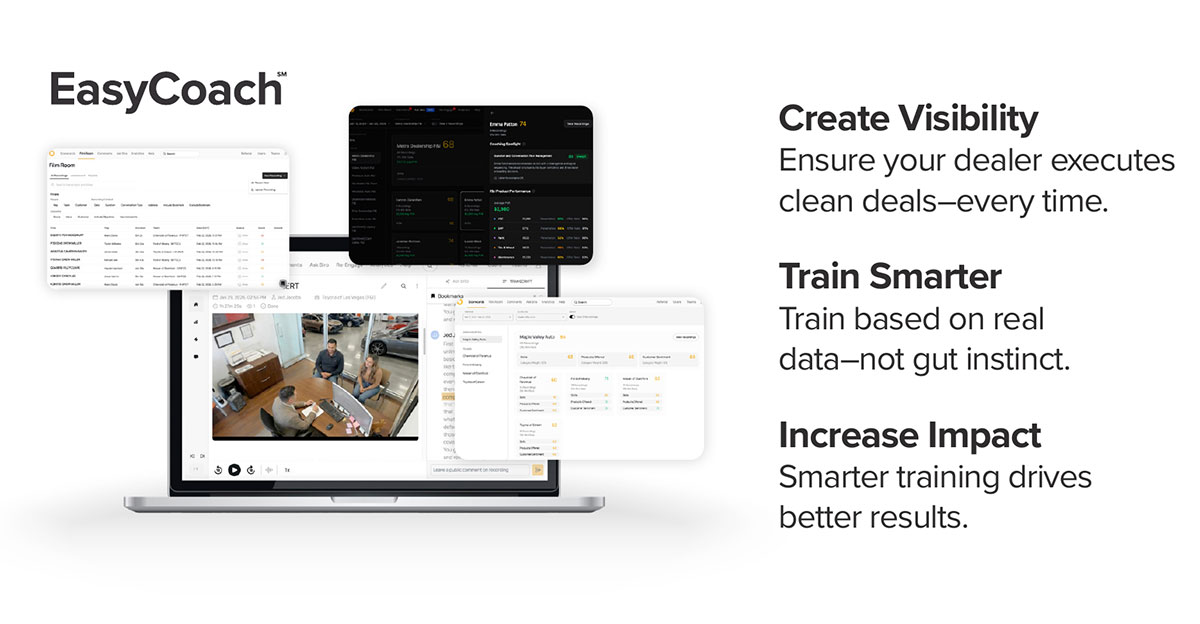
EasyCare’s EasyCoach is one example of where this is headed. It analyzes real F&I conversations and gives finance managers direct, specific feedback rather than general reminders about what they were taught months earlier. The value is not that it watches people. It gives dealer leadership visibility they never had and gives finance managers a faster path to correcting habits before those habits cost money or create compliance risk.
Turning Everyday Conversations Into Coaching Data
When finance conversations are analyzed at scale, patterns emerge that no one could see from attendance records or spot checks. Leaders can identify where a process is followed closely, where opportunities are consistently missed, and where compliance language needs to be tightened before it becomes a liability.
That level of specificity changes what a coaching conversation looks like. Instead of a manager telling a finance manager to sell more products, the conversation can point to a real example from a real deal. That is a harder conversation to dismiss, and it is a far more useful one for the person trying to improve.
Shortening the Ramp for New Finance Managers
Turnover makes onboarding a constant reality in F&I. New hires need to learn complex products, follow strict compliance standards, and build customer confidence, often within their first few weeks on the desk. The longer that ramp takes, the more it costs everyone with a stake in the store’s performance, agents included.
Continuous coaching tools shorten that runway by letting new finance managers learn from real, successful conversations and get feedback earlier than a formal training cycle would allow. New hires reach productivity faster, and the store is less dependent on anyone’s individual ramp-up speed.
Reinforcing Compliance Where It Actually Matters
Compliance training and daily execution too often live in separate worlds. A finance manager can pass a compliance course and still drift from it under pressure on a busy Saturday. That drift is where real exposure lives, and it rarely shows up until it becomes a complaint or a claim.
When compliance standards are reinforced inside everyday conversations instead of a separate annual checklist, they become part of how the store operates. Surfacing a drifting habit early protects the dealer, the customer, and every party with a financial interest in that store’s F&I performance.
Measuring Training by Results, Not Attendance
Attendance sheets and completed certifications have never proven that training worked. They proved someone showed up. Modern coaching technology connects training directly to execution, which means leaders can track which specific behaviors actually move penetration and retention, and which ones do not.
That shift changes how training gets discussed at the dealer level entirely. A completed course is not evidence of anything on its own. A trend line tied to real performance is, and it reframes training from a cost center into a measurable driver of results.
Supporting Managers, Not Replacing Them
None of this replaces the general manager or F&I director’s job of leading their team. AI-supported coaching works best when it gives those leaders sharper information to lead with, and gives finance managers clearer, more specific guidance than general feedback ever could.
When feedback is grounded in what happened on a call instead of opinion or memory, trust improves on both sides of the desk. That trust is what makes coaching stick, and it is why this model is gaining ground faster than another round of classroom training ever could.
What Agents Should Take From This
Agents who understand this shift are better equipped to have a real conversation with their dealer clients about why performance varies from store to store, even when the training was identical. That understanding builds credibility that a product pitch alone never will.
The dealerships that move from periodic training to continuous, data-informed coaching will build more consistent F&I performance and more confident teams. Agents who can speak to that shift with real understanding, rather than a talking point, will be the ones dealers trust when it is time to make a change.

About EasyCare
Since 1984, EasyCare has been helping some of the most successful dealerships in the nation drive results in their stores with a full suite of F&I products, forward-thinking training, dealership development, consultative participation programs, and a best-in-class claims experience. EasyCare has the only F&I products named a "MotorTrend Recommended Best Buy" for franchised dealers and has an A+ rating from the Better Business Bureau. EasyCare is part of the APCO Holdings LLC family of brands, which has protected over 24 million customers and paid over $3.7 billion in claims. For more information about EasyCare, please visit easycare.com.

